Jaguar XJS V12 Convertible History: From 5.3 to 6.0 Litres
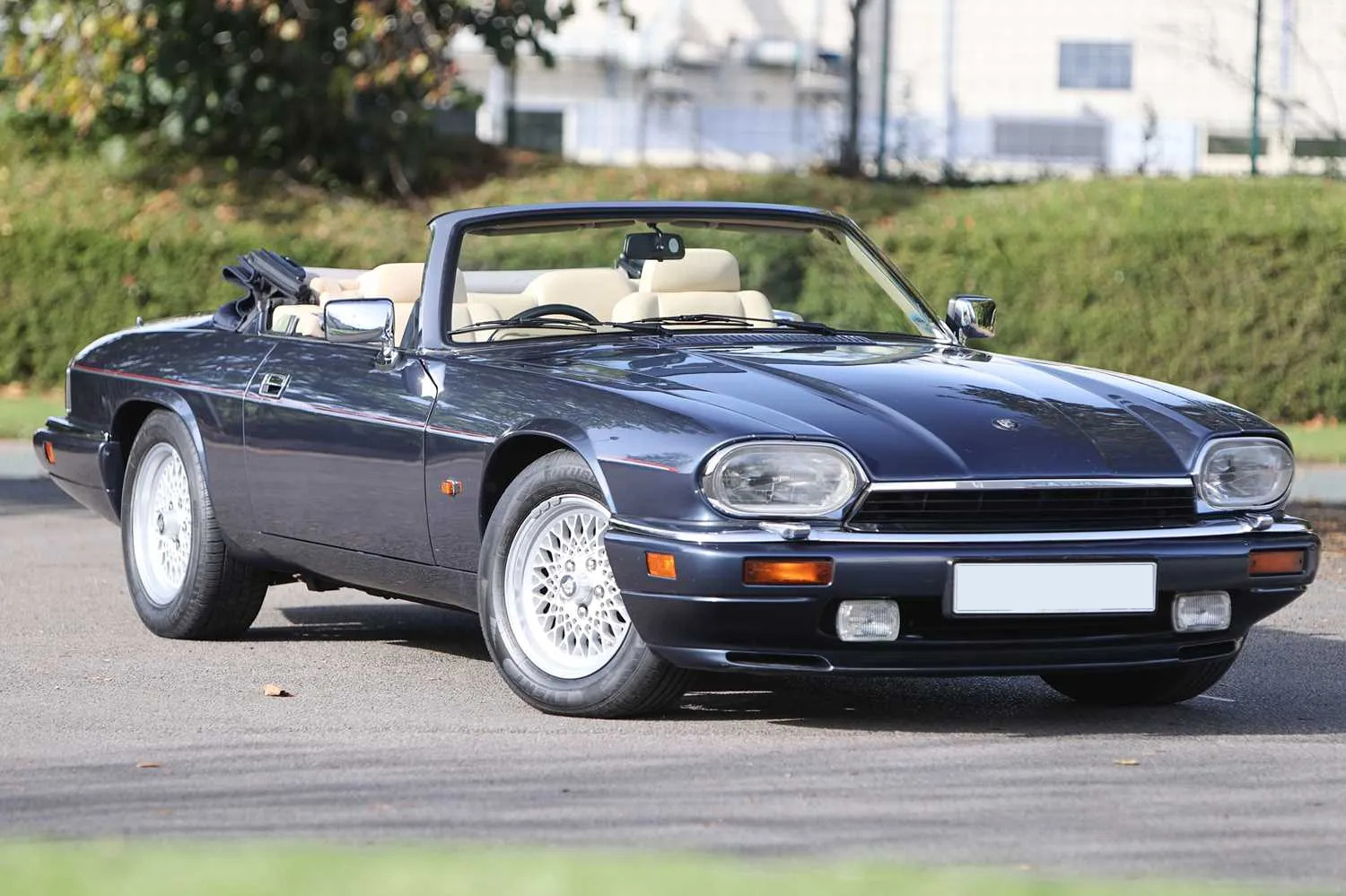
Few cars do relaxed, open-top grand touring quite like the Jaguar XJS V12 convertible. A long bonnet, a power-operated hood and twelve cylinders working quietly up front add up to a car built for covering distance in comfort rather than chasing lap times. It also remains one of the more accessible ways into a genuine twelve-cylinder classic, without the price tags attached to many of its European contemporaries.
The factory convertible was built with two different V12s: the original 5.3 litre and, in the final years, the enlarged 6.0 litre. This guide follows how the drop-top evolved across both eras, how the two engines differ in character, and what separates a well-sorted example from a car that will quietly drain its owner’s bank account.
How the XJS became a convertible
The XJ-S (later marketed simply as XJS) was produced from 1975 to 1996 and carried the near-impossible task of following the E-Type. It was never conceived as a direct sports-car successor. Instead it was a larger, more mature grand tourer, with a sharper, more modern silhouette shaped with input from aerodynamicist Malcolm Sayer. Its long bonnet and flying buttress rear styling divided opinion at launch, but are now widely appreciated as uniquely elegant.
A few milestones explain where the convertible sits in that story:
- The XJ-S/XJS ran for more than two decades and ended up outselling the E-Type, with over 115,000 examples built across the full production run.
- The factory convertible arrived in 1988 and launched with the 5.3 litre V12, backed by a sophisticated power hood rather than a basic manual arrangement. It was engineered to feel like a proper luxury product, not an afterthought.
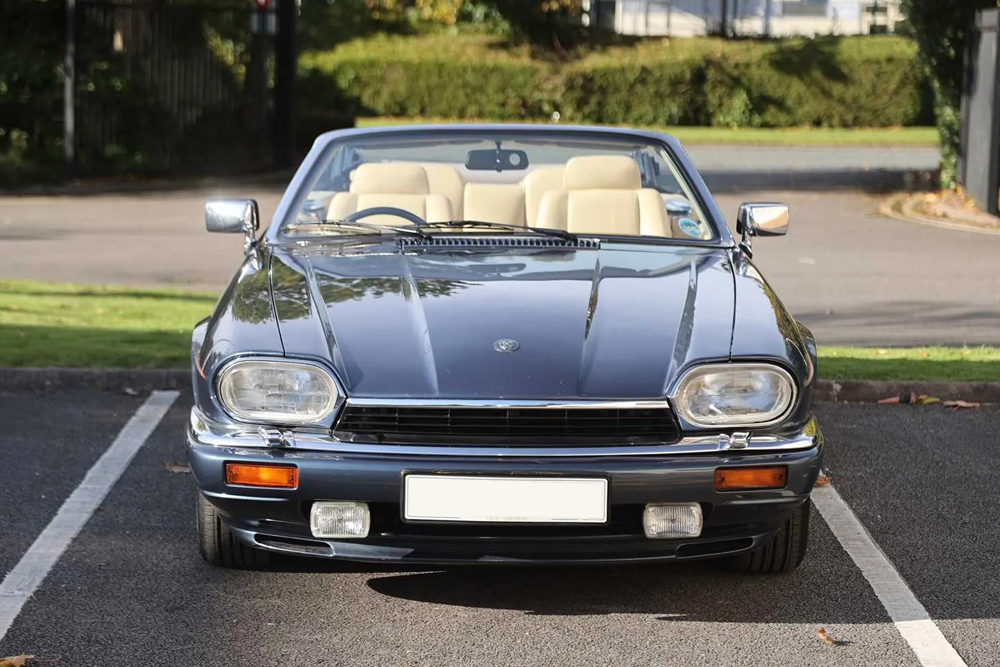
- Around 1991 the car was refreshed and the badge was simplified from “XJ-S” to “XJS”. The update brought cleaner rear light treatment, revised detailing and continuing improvements to structure and refinement, which matter more on a convertible, where rigidity shapes how the car drives and ages.
- The final chapter brought the 6.0 litre V12, the largest engine ever fitted to an XJS, before production ended in 1996.
Over that time the XJS matured from a controversial newcomer into a respected classic, and the V12 convertibles now sit among the most sought-after versions of the breed. For a closer look at how it measures up against its famous predecessor, see our comparison of the Jaguar XJS and E-Type.
The 5.3 litre era: the original V12 drop-top
The 5.3 litre (5,344 cc) naturally aspirated V12 is the engine that defined the XJS. It is famed for smoothness and a delivery that feels more like a turbine than a traditional muscle-car V8. The model gained a significant shot of credibility in the early eighties with the High Efficiency (HE) update, which used a Michael May-designed “Fireball” combustion chamber to improve efficiency and output and helped keep the car relevant.
Specifications and performance
- Engine: 5.3 litre naturally aspirated V12
- Power: approximately 274 to 291 bhp, depending on specification
- Transmission: three-speed automatic for much of the run, with manual examples far rarer
- Top speed: around 240 km/h (roughly 148 to 150 mph)
- Acceleration: 0 to 100 km/h in approximately 8 seconds, with 0 to 60 mph often quoted in the seven-second range
Period figures vary by market and specification, but the broad picture is consistent: these cars were genuinely fast for their era. The appeal, though, is not raw numbers. Rather than building drama with revs, the 5.3 leans on low-speed torque and refinement. Power arrives in a seamless, near-silent wave, and the three-speed automatic is tuned for creamy progress rather than sharp, sporty shifts. That suits a luxury drop-top designed to cross states, not chase apexes.
Pre-facelift or facelift?
Because the refresh landed around 1991, a car from that year may be a late pre-facelift example or an early facelift model, depending on build date. The later cars are most easily recognised by their revised rear lights. Many buyers see the 5.3 convertible as the purest expression of the model: the original factory convertible formula, with the most charismatic engine and the most evocative body style.
The 6.0 litre era: the final evolution
The last V12 convertibles received a 6.0 litre version of the engine, the largest ever fitted to an XJS. It produces roughly 300 horsepower and came paired with a smoother four-speed automatic, giving quicker acceleration and an even more relaxed cruise than the earlier three-speed cars. Combined with the chassis improvements of these final models, the 6.0 glides with real confidence and responds to a squeeze of throttle with dignified eagerness rather than drama.
The cabin carries the same old-world ambience that defines the breed: Connolly leather, glossy walnut trim, a wood-rimmed steering wheel and a full array of analogue gauges. Sought-after details across the convertible range include Lattice alloy wheels, full leather, the electric hood and heated electric seats.
Seating and rarity
Many early factory convertibles were configured as two-seaters, with rear seating arriving later as Jaguar continued its structural and packaging updates. Where fitted, the rear seats are small and best suited to occasional use, children or luggage. If rear seats matter to you, confirm the configuration of the specific car rather than assuming every XJS convertible is a 2+2.
The 6.0 also marks the end of an era. The XJS was the last of Jaguar’s V12 sports and grand touring cars, and some auction commentary cites production of only around 100 for the 6.0 litre convertible, which makes good survivors genuinely scarce. Figures differ between sources and model years, so treat any single number with some caution, but there is no doubt these final cars are far less common than the 5.3. We have an XJS 6.0 convertible in our collection that shows the later specification well.
What separates a good XJS V12 convertible
A well-sorted XJS convertible is deeply satisfying. A neglected one can be expensive. The difference usually comes down to evidence of maintenance, sensible preventative work and careful storage, and the single most important rule is to judge a car on condition and history, not on price alone. A cheaper car with gaps in its records can quickly cost far more than a well-documented one.
Cooling system
The V12 runs hot by design, so a healthy radiator, water pump and hoses are essential. Radiators can clog, and overheating can lead to major expense. If the temperature gauge behaves oddly on a drive, or there is evidence the cooling system has been ignored, that should either change the conversation substantially or end it.
Rust and water ingress
The XJS was not famous for rust-proofing, and while later shells improved, every example needs a methodical inspection of the sills, wheel arches, doors, floor pans and the area around the windscreen and scuttle. Surface corrosion can hide more serious issues, and damp carpets can point to leaks that create knock-on problems.
The hood and electrics
Check that the power hood raises, lowers and seals properly, and inspect the fabric for wear. A slow or struggling roof can suggest deeper problems with hydraulics, alignment or seals, and fixing it properly is rarely cheap. The XJS was well equipped for its day, which means more components to age: test every switch, gauge, window motor, warning light, the electric seats, heating and air conditioning.
History and originality
Look for a continuous paper trail with invoices, ownership records and evidence of regular V12 servicing, including the fuel injection and ignition components. Correct Lattice alloys, matching trim and an unmolested interior all support long-term value. If you are not deeply familiar with the V12, a pre-purchase inspection by a marque specialist is money well spent. For the servicing side of ownership, our Jaguar V12 maintenance guide for Australian owners goes into more detail.
Collectability and values in Australia
The XJS spent years in the shadow of the E-Type, and that perception is changing. Recent guides and market commentary describe it as a highly respected grand touring classic, and growing demand has helped the best examples move upward in value. Low-owner, well-documented V12 convertibles are getting harder to find, and genuinely mint, low-mileage cars are now comparatively scarce and can command strong money relative to average examples.
Australian advertised prices span a wide range depending on engine, mileage and condition, with 5.3 litre V12 convertibles commonly appearing in the tens of thousands rather than the hundreds. The rarer 6.0 litre cars and their end-of-era status attract particular interest from collectors. In Australia’s mild climate, with long stretches of coastal road, the convertible is also simply a rewarding car to use.
That is the XJS proposition in one line: classic V12 character, genuine grand touring comfort, and a market that increasingly rewards the right cars, those that are sorted, honest and properly presented.
Tony’s view: a grand tourer that deserves to be driven
Tony sees the XJS convertible as one of the most usable classic grand tourers: comfortable, smooth and happy on a long drive. The best way to enjoy one is to use it, and the best way to own one is to start with a car that has a strong service history.
If you are after a different year or colour from the XJS 6.0 Convertible in the collection, Tony can find one, including from the UK where there are more to choose from, and import it. Ready to move yours on? He can help you sell it.
Keep reading: Investing in Classic Convertibles in Sydney · Owning a Jaguar V12 in Australia
Frequently asked questions
When did Jaguar introduce the factory XJS convertible?
The factory convertible arrived in 1988 with the 5.3 litre V12 and a power-operated hood. The 6.0 litre V12 followed in the final years of production, which ended in 1996.
What is the difference between the 5.3 and 6.0 litre V12 XJS convertibles?
The 5.3 produces roughly 274 to 291 bhp and was mostly paired with a three-speed automatic, delivering the original, smooth grand touring feel. The 6.0 produces around 300 horsepower, uses a four-speed automatic and benefits from late-model chassis and refinement changes, giving quicker acceleration and an even more relaxed cruise.
How fast is a V12 XJS convertible?
Figures vary by market and specification, but the 5.3 litre cars are commonly quoted at around 240 km/h (about 150 mph) flat out, with 0 to 100 km/h in approximately 8 seconds. The 6.0 litre cars are quicker again thanks to the extra power and additional gear.
Does the XJS convertible have rear seats?
Many early factory convertibles were two-seaters, with rear seating arriving later. Where fitted, the rear seats are small and best for occasional use or luggage, so always confirm the configuration of a specific car.
Is the V12 expensive to maintain?
It can be if maintenance has been deferred. The V12 is regarded as durable when cared for, but cooling system condition, service history and evidence of preventative work are critical. Buying a well-maintained car usually costs less than catching up on a neglected one.
What changed in the 1991 XJS update?
The car was refreshed and the badge changed from “XJ-S” to “XJS”. Facelift cars are most recognisable by their cleaner rear light treatment and revised detailing, alongside ongoing improvements to structure and refinement.
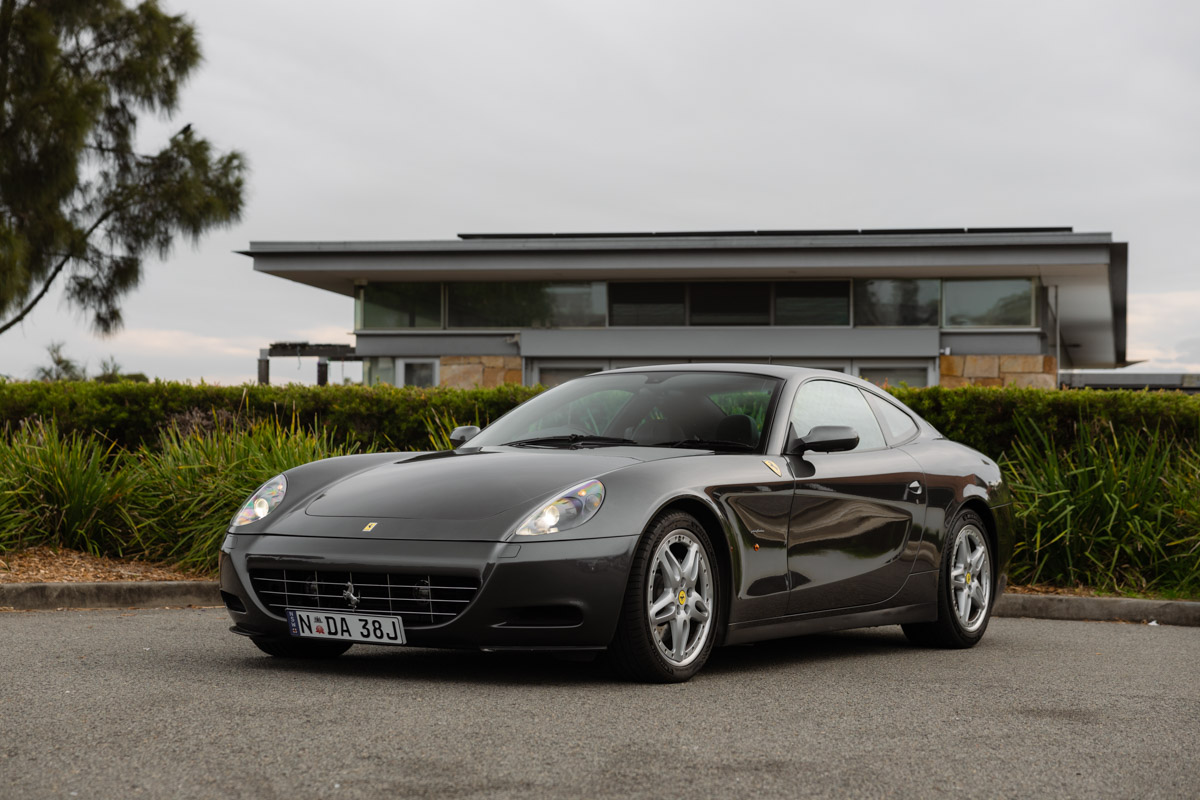
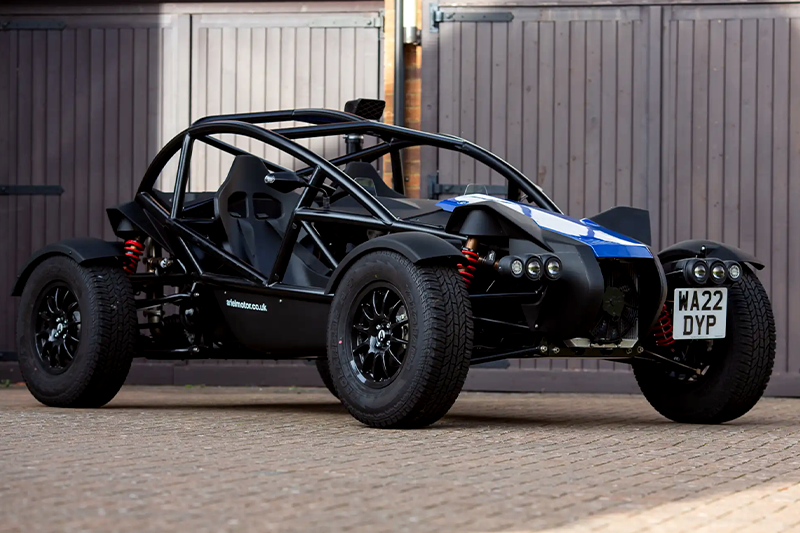
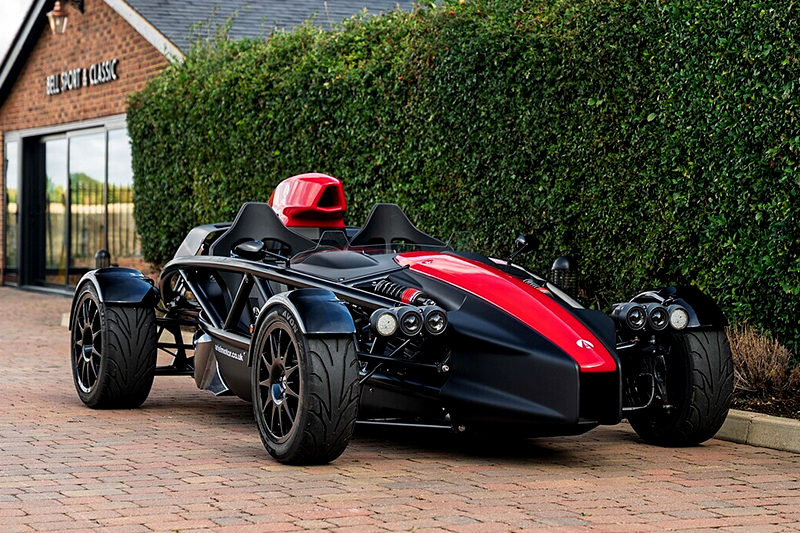
For Sale Now
These vehicles are available for sale now and ready for you to take home.
From The Collection
Vehicles from our private collection, driven and enjoyed. You can make an offer to purchase one at any time.